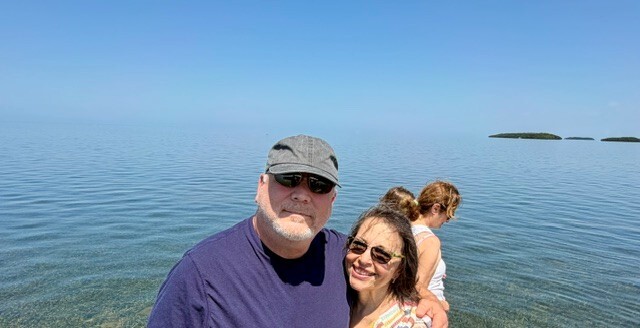

On May 17, 2023, my life changed forever. But to tell that story properly, I have to go back a few weeks first.
I started noticing little things that were easy to dismiss as just part of life. I couldn’t stand on one foot without leaning against something. I noticed it most when putting on clean pants — I had to steady myself against the wardrobe. I figured it was just part of getting older. Older people lose their balance, right? Besides, I worked out several times a week and did yoga regularly, so I assumed that was helping keep things under control.
Then there was the soup.
Soup is my favorite food group, and I ate it often. I started having trouble swallowing it, followed by little coughing fits. I couldn’t really explain that one, so I did what many people do when something doesn’t make sense: I ignored it.
I also couldn’t walk a straight line. Walking down the center hallway at work almost always ended with me drifting toward the handrail on the left side. I blamed that on dieting and not eating enough. I had lost seventy pounds over the previous year and a half, so in my mind, that explanation made perfect sense.
The people I worked with noticed something was off before I did. They whispered quietly among themselves until one day my boss finally pulled me aside and told me she thought I should see a doctor because “something was off.”
I had absolutely no idea what she meant.
Still, when your boss says something like that, you don’t ignore it. So I made an appointment with my doctor. But instead of talking about my balance problems or the coughing episodes, I told him I thought I was depressed after losing my mother to lung cancer less than a year earlier. He prescribed bupropion, and I started taking it. I even told my boss about the medication so she would know I had taken her concern seriously.
She gently said, “I don’t think that’s the problem.”
I remember feeling completely perplexed.
Then came May 17th.
The day itself started out completely ordinary. I went to work at Sunshine Children’s Home in Westchester, New York, where I was the Nurse Manager of the Willow Unit, a long-term care unit for chronically ill children. It was a stressful job managing the needs of 29 sick children while balancing nurses, aides, and administration, but that day itself was uneventful.
At the end of my shift, I got in my car and started the 25-minute drive home.
That’s when I noticed the double vision.
It wasn’t exactly double vision in the way I imagined it would be. It was more like ghost images floating beside the real ones. The Volkswagen Beetle in front of me had a faint second Beetle beside it. The double yellow lines on the road had ghost lines next to them.
It wasn’t painful. It wasn’t even frightening at first.
Just strange.
When I got home, I called my doctor’s office and told the nurse I thought the double vision might be a side effect of the bupropion. She put me on hold to speak with the doctor.
When she came back on the line, her tone had changed.
“Dr. Bhatt wants you to go to the closest emergency room immediately. He does not want you driving yourself, and if you don’t have someone to take you, he wants you to call 911.”
My mind started spinning.
Go to the emergency room? It was already after five o’clock. If I went now, I’d be there all night. And I had to work the next day. How was I supposed to make that work?
The nurse asked, “Dr. Bhatt wants to know what you’re going to do.”
I said, “Tell Dr. Bhatt I’m thinking about it.”
Then I hung up the phone and sat there for a long time thinking about it before finally realizing I had to go.
I woke my husband, who was dozing on the couch, and told him we needed to go to the ER.
“Renee,” he said groggily, “it’s already after five. We’re going to be there all night.”
“I know,” I told him. “But we have to go.”
As soon as I mentioned double vision at the emergency room, they brought me right in and immediately started testing. I was seen by a kind doctor who explained that he wanted to do a CT scan to rule some things out.
That sounded reasonable, so off I went for the scan.
When the doctor came back, I could tell by the heaviness in his step that something was wrong.
He explained that the CT scan showed what he believed was a clival chordoma — a rare tumor sitting beneath my brain at the base of my skull.
The doctor actually teared up while telling us.
That was the moment we understood this was serious.
Like many patients do, we waited until the doctor left the room before turning to the nurse for answers. She admitted she didn’t know much about it either and started Googling it alongside us.
That was when I learned I had a rare tumor buried deep at the base of my skull, pressing against critical nerves and structures. Suddenly every symptom made sense — the balance problems, the swallowing difficulties, the double vision.
Had I paid closer attention, maybe I would have recognized that something was truly wrong sooner. But honestly, who immediately thinks, “I must have a brain tumor?”
I certainly didn’t.
Two weeks later, I underwent an eight-hour surgery to remove the tumor. Six weeks after that, I began 35 rounds of proton radiation therapy.
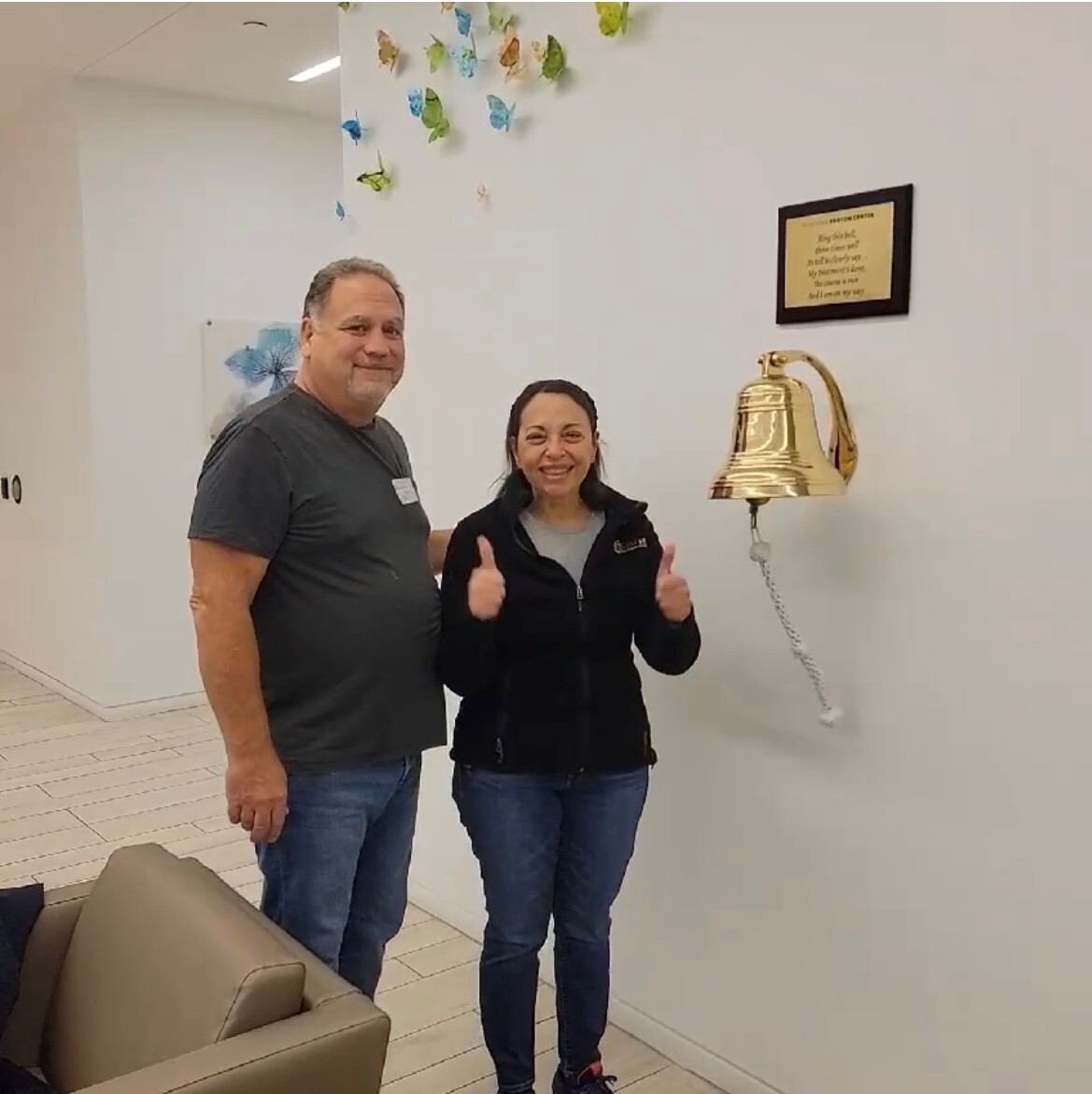
Everything changed after May 17, 2023.
For a long time, I mourned that date. Every year when it approached, I felt sadness settling in. To me, May 17th became the anniversary of fear, uncertainty, and the day my life stopped being the life I thought it would be.
But this year, something shifted.
I realized that while my life did change, change itself is not always tragedy.
My life changed. Life being the key word.
I’m alive.
So from this year forward, May 17th will no longer be a day of mourning for me. It will be a celebration of life. And every May 17th, you’ll find me doing something to celebrate the simple, extraordinary fact that I’m still here.