Surgery
Learn more about how surgery is used to treat chordoma.
Learn more


These treatment guidelines were developed by the Chordoma Global Consensus Group based on all available medical and scientific evidence on chordoma treatment and patient outcomes. The guidelines were published in the medical journal The Lancet Oncology as a reference to help doctors provide better and more consistent care to their chordoma patients.
As part of our commitment to helping patients and caregivers make the most informed treatment choices, we have made those same recommendations available to you here. Please read this information carefully and discuss it with your doctors.
If chordoma is suspected or has been diagnosed, the most important thing to do is find a medical center with expertise in treating chordoma patients. Chordoma is a rare disease that requires expertise to treat properly. It is important to have a multidisciplinary medical team that includes multiple specialists who work together to coordinate your care. All members of the care team should have substantial experience treating tumors of the skull base and spine, including chordoma.
Your care team should include specialists with experience diagnosing and treating chordoma in the following areas:
It is also recommended that your doctors discuss your case in a multidisciplinary tumor board. This is a regular meeting where different specialists come together to review each patient’s case and develop the best treatment plan. As a patient, you benefit from the knowledge and experience of many experts instead of just one or two. This is very important for treating a complicated disease like chordoma.
If you’ve been told you might have chordoma, it is important to be evaluated by a multidisciplinary team of specialists who have substantial experience treating chordoma, even before you know for sure if you have it. Teams with this experience are typically only found at larger hospitals, sometimes called referral centers, which see large numbers of patients. You should avoid having a biopsy or surgery to confirm the diagnosis outside of a referral center because, if not done properly, these procedures can cause the chordoma to spread.
Chordoma tumors are typically detected through imaging tests, which show organs and other structures inside the body, including tumors. The way the tumor looks on imaging tests can tell a radiologist whether the tumor might be chordoma.
When a chordoma is suspected, you will need magnetic resonance imaging, also called MRI, to help doctors make a diagnosis and plan for treatment. This is the best way to see a chordoma and how it is affecting the tissue around it, such as muscles, nerves, and blood vessels. No matter where the tumor is located, an MRI of the entire spine should be performed to see if the tumor may have spread to or developed in other areas of the spine. Chordoma is best seen on an MRI with a setting called T2 weighted imaging.
Another imaging test called computed tomography, also known as CT or “CAT” scan, is recommended in addition to MRI if it is not certain whether the tumor is chordoma. CT scans of the chest, abdomen, and pelvis are also recommended.
In some cases, doctors may order a positron emission tomography, or PET, scan. These are usually whole-body scans that look for widespread tumor activity. PET scans provide information about your body’s metabolic function; for cancer specifically, PET scans pick up on tumors that are rapidly using glucose (sugar). Cancer cells metabolize much more glucose than regular cells, so tumors “light up” on the scan. Because chordoma cells typically grow slowly, however, they are not always picked up as well by PET scans, so they are not always used in chordoma diagnosis or treatment.
These images should be interpreted by a radiologist who has experience diagnosing bone tumors.
While imaging studies can show the possibility of a chordoma, a definitive diagnosis can only be made by a pathologist who examines a sample of tumor tissue under a microscope.
For this reason, your medical team may consider taking a small sample of tissue from the tumor, called a biopsy, prior to surgery. However, biopsies are not recommended if the tumor cannot be reached safely or when there is a high risk of spreading tumor cells. For sacral and mobile spine tumors, a trocar CT-guided biopsy is recommended and should be done from the back.
Trocar CT-guided biopsy uses a CT scan to precisely direct the biopsy needle to the correct location. The biopsy needle is enclosed in a tube to keep tumor cells from spreading along the path of the needle — this is often called seeding. Check with your doctors to make sure they will use this method if a biopsy is planned.
If you have a biopsy before surgery, it is recommended that your surgeon remove the tissue around the area of the biopsy during surgery in order to remove any chordoma cells that might have spread when the biopsy disturbed the tumor.
Tissue samples should be evaluated by a pathologist who has experience diagnosing bone tumors. Your pathologist should test your tumor tissue for the presence of a protein called brachyury (also known as TBXT). Nearly all chordomas have high levels of brachyury, which makes it helpful for diagnosis.
These sections include the treatment you should have based on where your tumor is located. Click the arrows to expand each section.
Surgery and radiation are typically the first treatments for newly diagnosed chordoma. Learn about these and more on the pages below.
After you complete treatment, you will need to maintain a consistent schedule of follow-up imaging to check whether the tumor has returned or spread to other areas.
It is important for a chordoma expert who knows your case to review your follow-up scans and compare them to your previous ones. Depending on the treatment you’ve had, this monitoring may be done by your surgeon, radiation oncologist, or medical oncologist. If you traveled for your treatment and it would be difficult for you to travel back to your treating doctor for each follow-up appointment, discuss this with your doctor to make a plan for having the scans done locally and the images sent to your doctor for review.
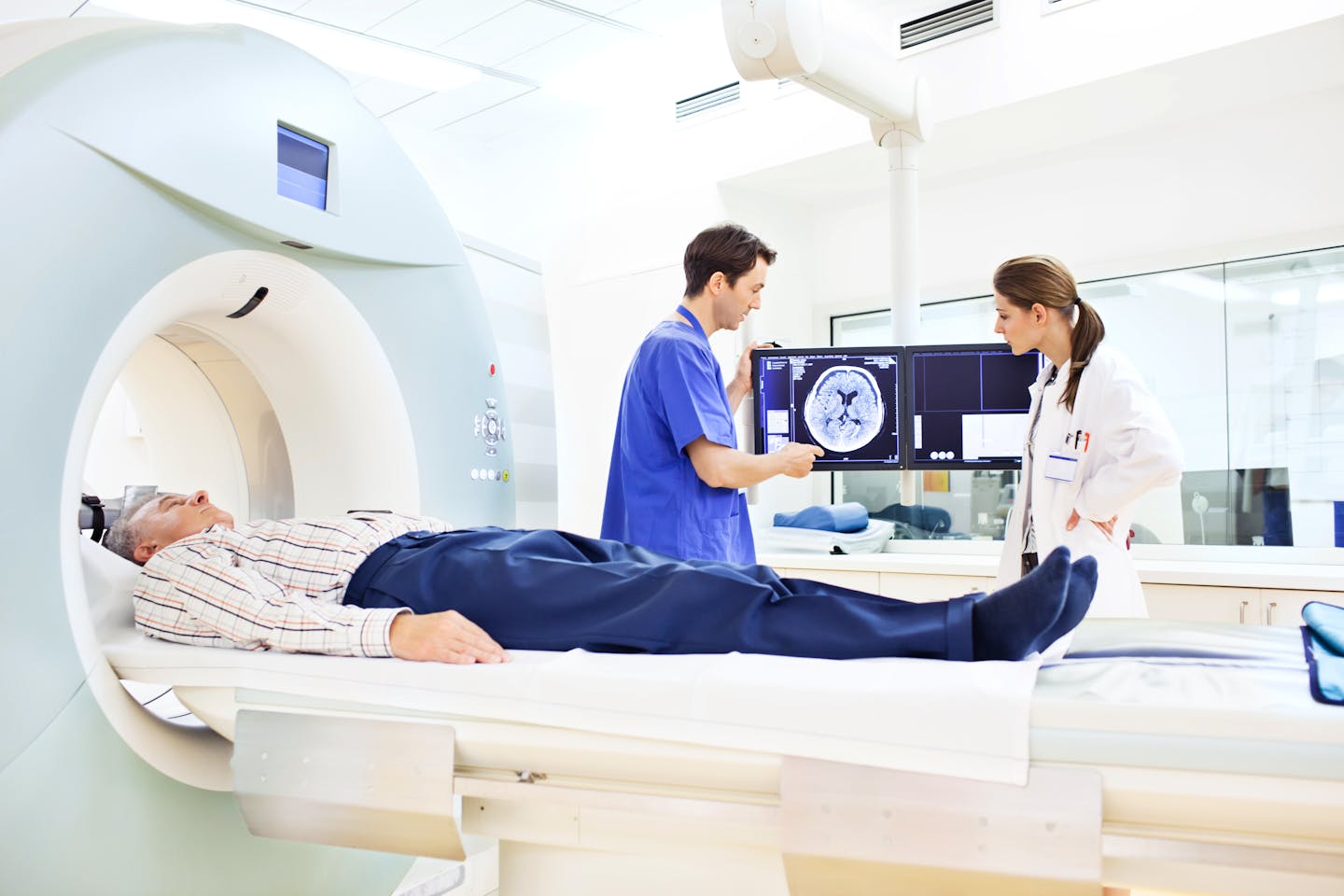
The Chordoma Global Consensus Group guidelines state that you should have an MRI every 6 months for the first 5 years after treatment. The MRI should look at the area of the original tumor as well as any areas where it could spread. After 5 years, you should have an MRI at least once a year for 15 years.
Additionally, the U.S. National Comprehensive Cancer Network bone cancer guidelines recommend a CT scan of the chest every 6 months for 5 years, and then annually thereafter, to see if chordoma has spread to the lungs. Some experts suggest the MRI include the whole spine, and that CT scans of the pelvis and abdomen be done annually as well. It is important to talk with your doctors about what monitoring you need after treatment.
Treatments for chordoma and sometimes the tumor itself can often cause side effects and other issues that affect your quality of life. Our resources can help you understand these challenges and learn how to manage them.

Find out how to manage side effects like speech and swallowing issues, hearing loss, double vision, and endocrine system imbalances.

Find out how to manage side effects like loss of mobility, bladder and bowl incontinence, and sexual dysfunction.
Support from someone who's been there can make all the difference.
A rare disease like chordoma can be lonely, so we provide ways for patients, survivors, caregivers, and co-survivors to connect with one another.
Peer Connect is a free, confidential peer-to-peer support program that connects anyone touched by chordoma with another person whose experiences with chordoma are similar. Trained Peer Guides are available to support chordoma patients who are newly diagnosed, patients in active treatment, survivors, caregivers, family members, or friends.
The information provided herein is not intended to be a substitute for professional medical advice, diagnosis, or treatment. Always seek the advice of your or your child’s physician about any questions you have regarding your or your loved one’s medical care. Never disregard professional medical advice or delay in seeking it because of something you have read on this website.